How to Troubleshoot a Garage Door That Won’t Open Manually
A non-operational garage door is frustrating, but often the cause can be diagnosed with a few simple checks. Before starting, remember that a garage door system is under high tension. Safety is paramount: never attempt to repair or adjust springs or cables yourself, as this can lead to serious injury or further damage.
If you suspect any significant damage (especially to springs or cables), stop troubleshooting immediately and contact the Wessex Garage Doors repair team.
Step 1: Check the Lock and External Handle Mechanism
The first and simplest check is the external release system, as it is often the first point of failure for manual doors.
| Checkpoint | Action | Potential Problem & Solution |
| Is the key turning? | Try the key gently in the lock. | Lock is seized or key is broken. If the key won’t turn, do not force it, as it could snap. If you have access via a side door, you can usually open the door from the inside handle until the lock is replaced. |
| Is the handle turning? | If unlocked, attempt to turn the handle. | Handle is detached from the release mechanism. If the handle spins freely or turns too far without resistance, it has likely become disconnected from the internal latching mechanism. You will need to access the garage via a side door and use the internal handle until the connection is repaired. |
| Is the mechanism jammed? | If the handle doesn’t move at all. | Release mechanism is jammed. An obstruction or a mechanical fault within the latching system is preventing movement. Do not force the handle from the outside, as this can cause more damage. Proceed to Step 2 (Internal Obstructions). |
Step 2: Look for Simple Obstructions
A common, simple fix is often an object accidentally blocking the door’s path or mechanism.
External Check
- Ensure the path directly outside the door is completely clear.
- For doors with external tracks (like roller or up-and-over styles), visually inspect the tracks on both sides for stones, leaves, or a build-up of debris at the bottom. Carefully remove any blockages you can see.
Internal Check
- If you have a side entrance, go inside the garage.
- Check behind the door: Ensure no items (bicycles, boxes, tools) have fallen against the inside of the door panel or into any part of the opening mechanism. If you find an obstruction, carefully remove it.
- Check the Latching Mechanism: Operate the internal handle. Watch to see if all latching points (usually on the sides or top) disconnect from the frame when the handle is pulled. If they don’t, you may have a broken connecting rod or cable, requiring professional repair.
Step 3: Inspect Tracks, Rollers, and Alignment
The door runs on a track system (for up-and-over, sectional, and roller doors). Misalignment or damage here can cause the door to become “stiff” or fully stuck.
- Examine the Tracks: Look closely at the vertical and horizontal tracks.
-
- Check for debris and dirt: Use a damp cloth to clean the inside of the tracks. Do not use oil or thick lubricant on the tracks themselves, as this attracts dirt and can worsen the problem.
- Check for Bends or Dents: Look for any misshapen areas, dents, or gaps between the rollers and the rail. If a track is only slightly bent, it may be possible to gently tap it back into shape with a rubber mallet or hammer but be cautious to avoid causing more damage.
- Examine the Rollers: These are the small wheels that run in the tracks.
-
- Check for signs of wear, such as flat spots or cracks.
- Crucially, check that all rollers are still securely inside the track. If a roller is outside the track, the door has become detached. Do not attempt to move the door, as it is highly unstable and could fall. Call a professional immediately.
- Check for Parallelism: If the door appears crooked or “wonky” in the opening, it may be running unevenly along the tracks. This can indicate a serious spring or cable issue (see Step 4) and requires professional intervention.
Step 4: Assess Springs and Cables (The Danger Zone)
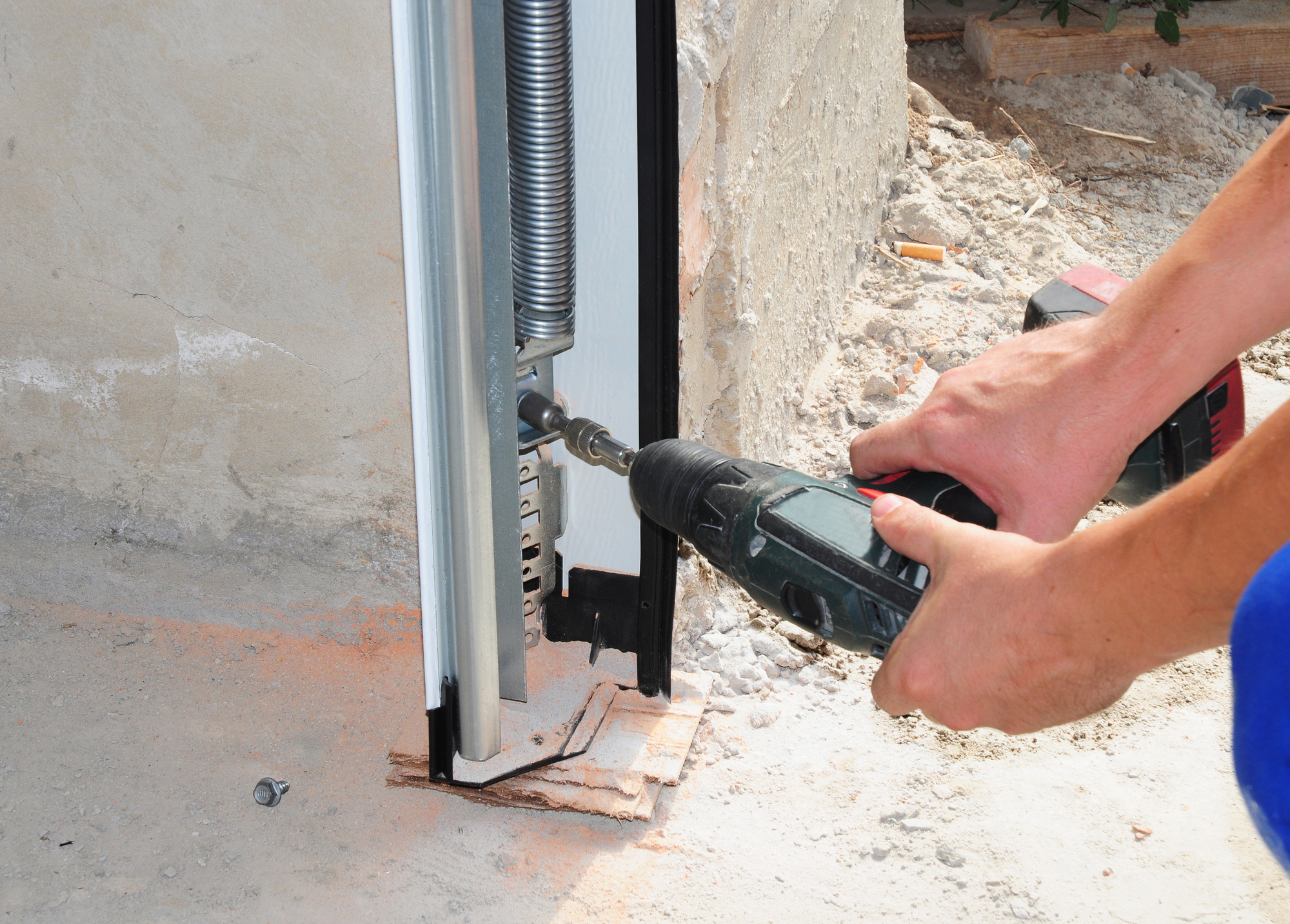
The springs (torsion, located horizontally above the door, or extension, located vertically along the sides) and cables are the counterbalance system that makes the heavy door feel light.
| Checkpoint | Action | Potential Problem & Solution |
| Door feels heavy or stiff to lift? | This is the clearest sign that a spring has broken or lost tension. A broken spring often makes a very loud ‘bang’ when it snaps. | HIGH DANGER. Do not attempt to lift the door, as its full weight is no longer counterbalanced. NEVER attempt DIY spring or cable replacement. The extreme tension in these components is lethal. You must call a professional. |
| Are the springs or cables broken? | Visually check the springs/cables. If they are snapped, frayed, or unwound from the drums. | HIGH DANGER. Do not touch or operate the door. Broken cables or springs can cause the door to fall or come off its tracks. Contact Wessex Garage Doors for immediate professional service. |
Step 5: Lubrication and Maintenance
If the door is simply stiff, squeaky, or sticking, a lack of lubrication may be the culprit.
- Locate Moving Parts: Identify all pivot points, hinges, and bearings.
- Apply Lubricant: Apply a specialised garage door lubricant (or a product like WD-40, though a dedicated lubricant is better) to all moving metal parts, such as hinges, rollers (the bearings and axles, not the wheel surface or the track itself), and pivot points.
- Work the door: If you can safely move the door, open and close it a few times to work the lubricant into the mechanisms.
When to Contact Wessex Garage Doors
If, after performing the safe checks in Steps 1, 2, 3 (cleaning/minor straightening), and 5 (lubrication), your garage door still won’t open, the problem is mechanical and requires a trained engineer.
You must call a professional immediately if you observe any of the following:
- Broken Springs or Cables: The door feels incredibly heavy or you see a snapped cable or spring.
- Roller Disengagement: A roller is out of the track, or the door is visibly crooked/unbalanced.
- Internal Latch Failure: The internal mechanism is broken, or the door is jammed and cannot be opened even from the inside.
Our team of experienced engineers can quickly diagnose and safely repair all types of garage door faults. Contact us today to book a repair quote.